
Phytochemical Profiling of In vitro Anticancer Active Fraction of Physalis angulata Using Mass-Based Dereplication
Keywords:
Physalis angulata, Bioassay-guided fractionation, LC-MS, Anticancer activity , Physalin BAbstract
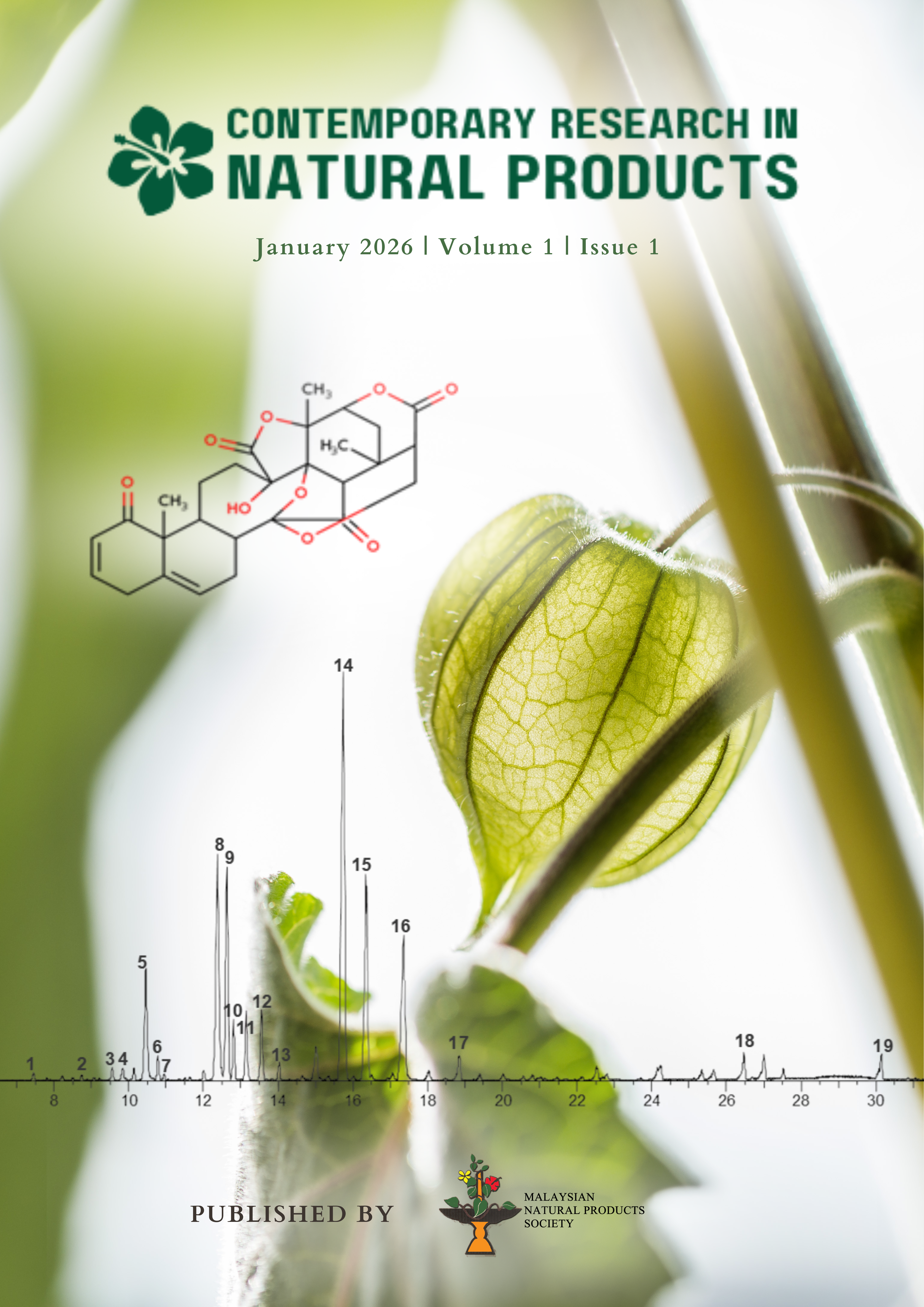
Physalis angulata, a medicinal plant traditionally used for various ailments, was studied for its potential as a source of anticancer agents using a bioassay-guided fractionation method. The objective of the study was to assess the in vitro anticancer properties of fractions derived from the P. angulata whole plant and to identify the active constituents through liquid chromatography–mass spectrometry (LC-MS) analysis. Whole plant crude extracts were subjected to fractionation, and the obtained fractions were evaluated against a panel of six human cancer cell lines, which included ovarian cancer (A2780, SKOV3), melanoma (A375), cervical cancer (HeLa), colorectal cancer (HT-29), and breast cancer (MCF-7). Fraction 6.1 exhibited the highest level of cytotoxicity across all tested cell lines, suggesting its potential as a significant source of anticancer compounds. Following the LC-MS analysis of Fraction 6.1, a tentative identification of 19 chemical constituents was achieved through a dereplication process utilizing accessible mass spectral databases. Physalin B, a recognized bioactive steroidal lactone with established anticancer properties, was identified as the major component of the active fraction. The presence of additional physalins and withanolide-type compounds indicates a potential synergistic or additive effect contributing to the observed anticancer properties. The findings substantiate the ethnopharmacological application of P. angulata and highlight its potential as a candidate for additional phytochemical and pharmacological research. Future work will focus on the isolation of compounds, elucidation of their structures, and mechanistic studies to confirm the bioactivity of the identified compounds and evaluate their therapeutic significance in cancer treatment. This research establishes a scientific foundation for evaluating P. angulata as a potential natural source of anticancer compounds.
Downloads
Published
Data Availability Statement
The data supporting the findings of this study are available from the corresponding author upon reasonable request. LC-MS raw data and in vitro assay results are not publicly archived due to institutional policy but can be shared upon request for academic and research purposes.
